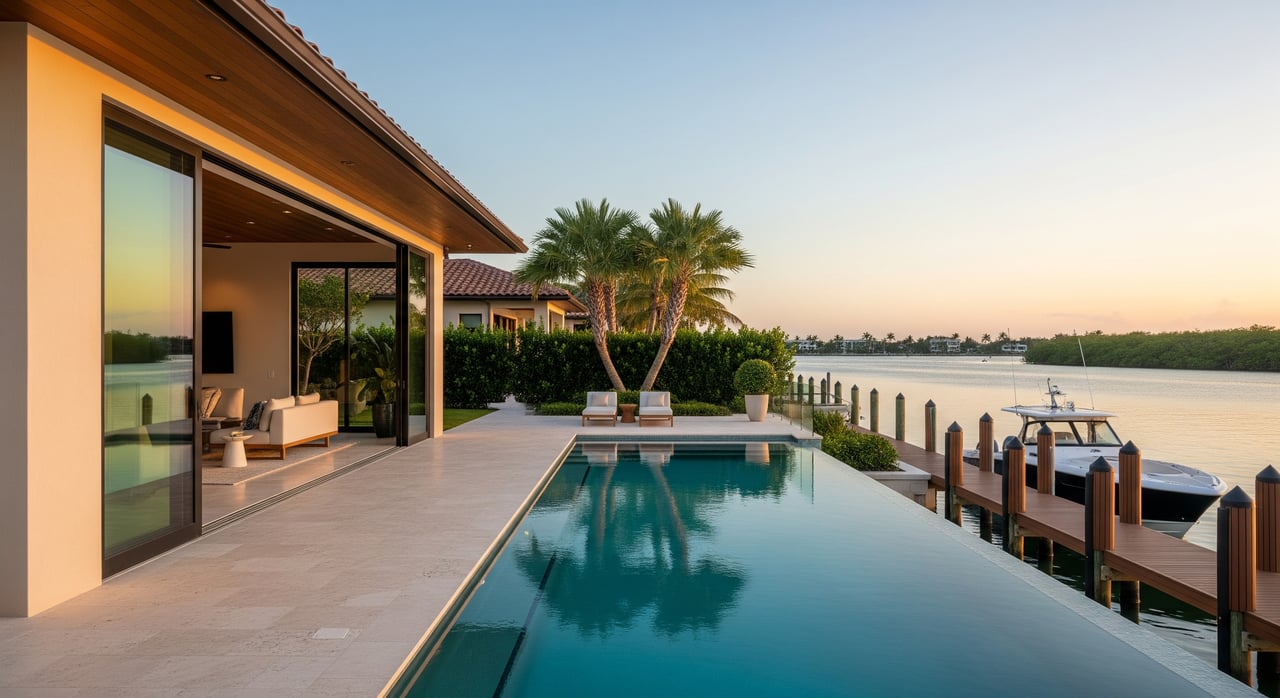
Picture this: you wake up, coffee in hand, and step from your backyard onto your private dock. The canal is calm, and within minutes you are cruising along the Intracoastal Waterway toward the open Atlantic. If you are exploring Boca Raton waterfront living, that rhythm is exactly what Bel Marra promises. This guide breaks down what “waterfront” really means here, how boating access works, the lifestyle you can expect, and the due diligence smart buyers complete before they close. Let’s dive in.
What “waterfront” means in Bel Marra
Bel Marra is a boutique waterfront pocket in Boca Raton designed for a boating-first lifestyle. In practice, “waterfront” here generally means direct water access from your property, not just a view. Most homes are on navigable canals that lead to the Intracoastal Waterway, and from there to the Atlantic through a nearby inlet.
Docks, lifts, and seawalls
Many properties feature private docks, boat lifts, and concrete seawalls. You use these for storing your boat, launching smaller craft like jet skis or tenders, and stepping aboard for a quick canal-to-ICW run. Always verify whether a property includes a deeded dock or slip, the condition of the seawall, and the permitted configuration of any lifts.
Canal orientation and privacy
Canal layout shapes your day-to-day experience. Docks facing the main ICW may see more passing boat traffic and wake, while side canals tend to be quieter with more privacy. Your views, noise levels, and docking ease are influenced by where the home sits along the system.
Boutique neighborhood feel
Bel Marra’s small scale suggests quiet residential streets with limited commercial activity inside the neighborhood. You will drive a short distance for beaches, dining, and shopping elsewhere in Boca Raton, while enjoying a low-key, waterfront-at-home setting.
Boating access from your dock
The appeal of Bel Marra is simple: walk out back, cast off, and go. Understanding the route and infrastructure helps you match the property to your boating plans.
Canal to ICW to inlet
Waterfront homes here typically connect from canal to the north-south Intracoastal Waterway, then to the Atlantic Ocean through a nearby inlet that serves Boca Raton and adjacent communities. Your actual run time depends on where you start on the canal system and typical traffic conditions.
Depth, tides, and vessel size
Canal depths vary with tides and natural silting. If you own or plan to buy a larger vessel, confirm depth at mean low tide and ask about dredging history. The right slip geometry and lift capacity matter if you plan to store a heavier boat on-site.
Bridges and air draft limits
Fixed bridges, if present on your route, create air draft constraints that limit tower height, flybridges, and masts. Always trace the path from your dock to the ICW and inlet to be sure your vessel and any planned upgrades will clear every bridge.
Marinas, fuel, and service
Boca Raton and neighboring towns offer a mix of resort marinas, yacht clubs, and commercial facilities for fuel, pump-outs, maintenance, and haul-outs. Availability and access can vary, and some locations require memberships or reservations. If you make frequent ocean runs, map your go-to fuel docks, mechanics, and service yards ahead of time.
Day-to-day life on the water
Bel Marra living is about everyday access to the water, whether you are an offshore angler, a sunset cruiser, or a paddleboarder.
Typical outings and routines
From your private dock, you can take short cruises on the ICW, fish inshore or offshore, stop at a sandbar, or kayak the canals. On good-weather days, ocean runs for fishing or diving are part of many residents’ routines.
Dining and social by boat
Waterfront restaurants in the Boca area often welcome boat arrivals at designated docks or transient slips. Policies and availability vary by season and establishment, so it is best to call ahead to confirm docking.
Noise, views, and privacy tradeoffs
Living on the water means you enjoy front-row canal views and outdoor entertaining. You also accept some boat noise and activity, especially near the main ICW and on weekends or holidays. Side canals tend to be calmer, but neighbor wake and dock work are part of the lifestyle.
Due diligence before you buy
Waterfront ownership adds a few essential checks to your standard home inspection. A precise review upfront can save you time and expense later.
Inspect seawalls, docks, and lifts
Seawall integrity is critical. Hire a structural engineer or marine contractor to evaluate the seawall, dock pilings, electrical for lifts, capacity ratings, and slip geometry. Replacement or major repair can be costly and usually requires permits, so request age, maintenance records, and any recent contractor reports.
Verify water rights, permits, and HOA rules
Confirm whether the dock is deeded to the property or controlled by an association. Review recorded easements and riparian rights. Ask the seller for permits related to dock, lift, or seawall work, and verify with the county and state. If there is an HOA, check any rules on boat length, appearance, and wake.
Insurance and resilience planning
Expect separate flood and windstorm coverage. Mortgage lenders may require flood insurance if the home is in a Special Flood Hazard Area. Boat insurance is also standard. Plan for hurricane readiness, including haul-out options, tie-down protocols, and marina contingencies after storms.
Long-term risks and maintenance
South Florida faces sea level rise and nuisance flooding over time. Review local resilience resources, ask about historical flooding or storm damage, and assess potential future work such as seawall upgrades. Budget for routine marine maintenance on docks, pilings, and lifts.
Safety, rules, and environmental stewardship
Waterfront living comes with responsibilities to keep you, your neighbors, and the environment safe.
Boating rules and safety basics
Florida sets minimum safety and registration standards. Carry proper life jackets, fire extinguishers, and navigation lights. Follow posted speed and no-wake zones in canals and along the ICW to protect shorelines and other boaters.
Protected habitats and clean boating
Seagrass beds, mangroves, and protected species areas are part of the coastal ecosystem. Respect posted manatee zones and seasonal restrictions. Use pump-out stations and follow best practices for fueling and maintenance to protect water quality.
Buyer’s quick checklist for Bel Marra
- Confirm dock rights. Is the dock deeded to the property, and are there any easements or riparian restrictions?
- Order a marine inspection. Evaluate seawall, dock pilings, lift capacity, electrical, and slip geometry.
- Measure route limits. Check canal depth at mean low tide and verify bridge clearances to the ICW and inlet.
- Review permits. Request documentation for any dock, lift, or seawall work and confirm with county and state offices.
- Check community rules. If applicable, review HOA covenants related to boat size, storage, and dock appearance.
- Get insurance quotes early. Compare flood, windstorm, and boat coverage and understand lender requirements.
- Map your support network. Identify fuel docks, repair yards, haul-out options, and any marina memberships you may want.
- Visit at different times. Assess boat traffic, noise, and privacy on weekdays, weekends, mornings, and evenings.
- Ask about resilience. Review flood maps, local planning documents, and the property’s storm and repair history.
Bel Marra offers a rare balance of privacy at home and quick access to Boca’s best on the water. If a life organized around your dock is the goal, the neighborhood delivers. The key is aligning the property’s marine infrastructure and route constraints with the vessel you own or plan to own, and preparing for the realities of coastal ownership.
Ready to explore waterfront options or get a second opinion on a property? Connect with Dana Ocampo for discreet buyer representation, local guidance on Bel Marra’s canals and ICW access, and concierge-level service. If you are selling, ask about our Free Home Valuation and Customized Marketing Plan backed by Douglas Elliman’s global reach.
FAQs
What does “waterfront” usually include in Bel Marra?
- Most properties have direct canal access with a private dock, lift potential, and a seawall, rather than only a water view.
How do I confirm my dock rights before buying?
- Verify deeded dock ownership, check for easements, and review seller permits and county records to confirm water access rights.
Will my boat clear bridges from Bel Marra to the ocean?
- Trace your exact route to the ICW and inlet, measure bridge air draft at high tide, and compare to your vessel’s height and planned upgrades.
How deep are the canals for larger vessels?
- Depths vary by tide and silting; measure at mean low tide and ask about dredging history before committing to a boat size.
Are there nearby marinas for fuel and service?
- Yes, the Boca area offers resort and commercial marinas for fuel, pump-outs, and repairs, though access and membership may vary by facility.
What should I inspect on seawalls, docks, and lifts?
- Hire a marine professional to assess seawall integrity, pilings, electrical for lifts, capacity ratings, and slip geometry.
What insurance do I need for a Bel Marra waterfront home?
- Expect separate flood and wind coverage for the home and dedicated boat insurance; lenders may require flood insurance in certain zones.
Is Bel Marra noisy on weekends and holidays?
- Main ICW-adjacent areas see more traffic and wake during peak times, while inner canals are typically quieter.