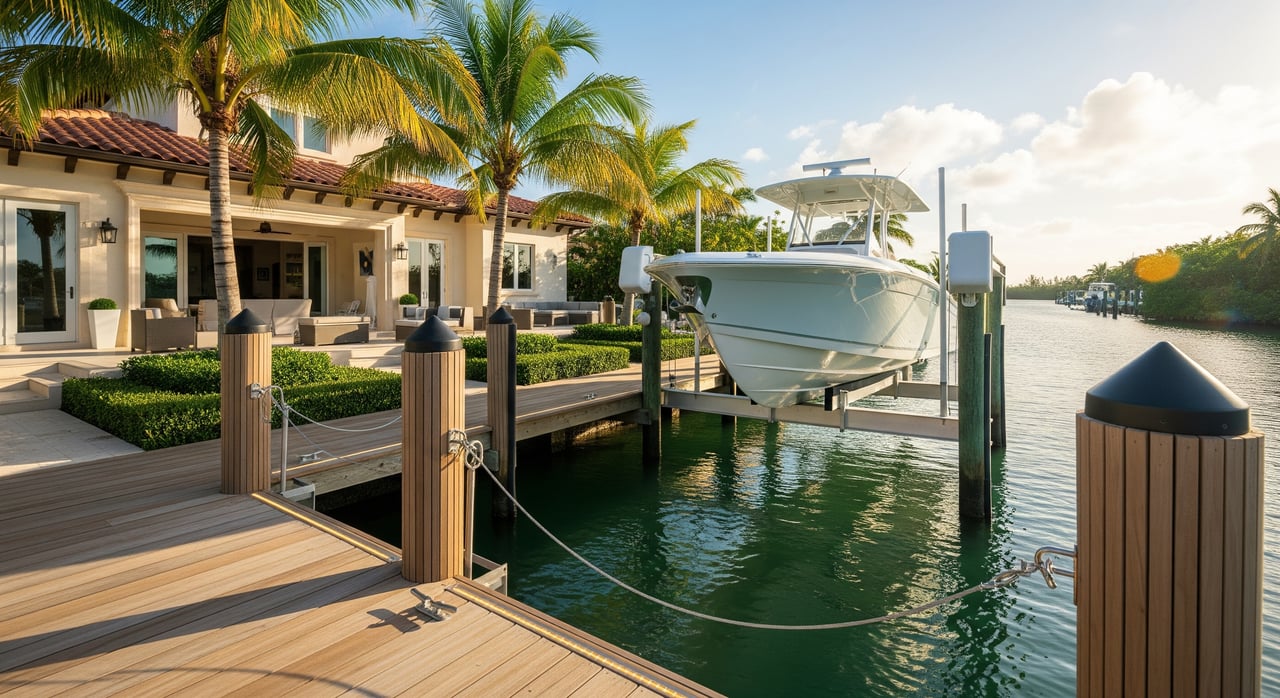
If you are buying or already own a home in Bel Marra, your dock is as important as your kitchen. You want easy loading for weekend runs, low upkeep in saltwater, and confidence when storms roll through. Choosing the right dock and lift in Boca Raton’s intracoastal environment takes smart planning. In this guide, you will compare dock types, lift options, durable materials, permits, and an easy step-by-step plan to move from idea to installation. Let’s dive in.
What to consider first
Before you pick a style or brand, get clear on how you boat and how your site behaves.
- Boat profile: length overall, beam, weight when fully loaded, and hull shape.
- Water depth and tide: seasonal changes, bottom type, and clearance at low tide.
- Storage style: in-water slip or out-of-water lift to reduce fouling.
- Exposure: wind, wake, and hurricane risk along your canal or intracoastal frontage.
- Environmental limits: overwater coverage, shading, and seagrass protection.
- Permitting: city, county, state, and federal approvals can shape your design.
Dock configurations explained
Fixed piling docks
A fixed piling dock gives you a stable platform for year-round access. It works well in shallow to medium depths and provides steady footing for people and gear. Properly engineered piles and decking improve durability in exposed locations. You should balance stability with environmental factors, since solid decking can increase shading over seagrass.
Floating docks
Floating docks rise and fall with tides, which can make boarding easier and limit permanent shading. HDPE or foam-filled modules keep maintenance low, especially when paired with grated decking to let light through. In severe storms, floating sections need strong anchoring and secure connections. Site-specific limits on slip size and ramp length can affect feasibility.
T-heads and finger piers
A T-head expands berthing space at the end of a central pier, which helps if you expect frequent guests or a larger primary vessel. Finger piers create individual slips branching from a walkway for multiple boats. Layout must respect neighbor setbacks and navigation clearances. Your contractor will map clearances during the site assessment.
Combination layouts
You can pair a fixed access walkway with floating finger slips to balance stability and light penetration. This approach often meets environmental goals while improving day-to-day usability. If you want flexibility for different boat sizes, a hybrid layout may be the most adaptable choice.
Choosing a lift for your boat
Platform or cradle lifts
Platform and cradle lifts raise the hull on bunks or adjustable supports. They fit many recreational boats and are widely available. You get solid support with adaptable bunks, though props and struts may remain exposed while lifted. Plan on careful bunk setup for unique hull shapes.
Vertical elevator-style lifts
Vertical systems lift the boat fully out of the water on a carriage. They can reduce hull fouling and long-term stress when properly sized and installed. These systems often require more structural capacity and adequate water depth. Expect higher cost with stronger framing and piles.
Floating and PWC lifts
For small boats and personal watercraft, buoyancy-based floating lifts and compact PWC lifts are space-efficient. They are popular for secondary craft where convenience and cost control matter. They still need secure anchoring and attention to storm procedures.
Lift sizing and setup checklist
Choose a lift that matches your exact vessel and site. Confirm each item with your marine contractor:
- Capacity: match the lift to the boat’s fully loaded weight, including engines, fuel, and gear.
- Beam and bunks: ensure cradle width and adjustable bunks fit the hull.
- Depth: verify the required water depth at low tide where the lift will sit.
- Access: plan safe access to propellers and drives for maintenance.
- Power: specify marine-rated electrical or hydraulic systems per Florida code with GFCI.
- Storm plan: decide if the boat stays on the lift or is hauled before hurricanes and how the system will be secured.
Materials that last in Boca Raton saltwater
Boca Raton’s marine environment is salty, humid, and sunny, with strong UV and marine borers. Pick materials and hardware that resist corrosion and fouling.
- Piles: concrete offers long life; properly treated timber can be acceptable; coated or galvanized steel requires anode protection and inspections.
- Framing: marine-grade aluminum is lightweight and corrosion-resistant; galvanized steel needs hot-dip galvanizing and cathodic protection.
- Fasteners and hardware: use 316 stainless steel in direct saltwater exposure.
- Decking: tropical hardwoods are durable and attractive; pressure-treated lumber costs less but needs more upkeep; capped composite and PVC options are popular for low maintenance. Open-grate decking in select zones can reduce shading.
- Floating modules: UV-stabilized HDPE floats are durable and low maintenance.
- Corrosion control: plan for sacrificial anodes on metal elements, isolation of dissimilar metals, and marine-grade coatings with a maintenance schedule.
- Electrical: select sealed, marine-rated wiring and components with ground-fault protection and proper bonding per Florida electrical code.
Permits and approvals in Boca Raton
Most waterfront projects require multiple approvals. Early coordination smooths the process and reduces redesigns.
- City permits: The City of Boca Raton issues building, electrical, and inspection approvals through the City of Boca Raton Building Department.
- County environmental review: Palm Beach County evaluates shoreline and habitat impacts through Palm Beach County Environmental Resources Management.
- State authorization: Work on coastal submerged lands may require approvals or leases through the Florida Department of Environmental Protection.
- Federal permits: Projects in navigable waters can need review by the U.S. Army Corps of Engineers Jacksonville District.
- Floodplain and coastal codes: Check your flood zone and elevation requirements via the FEMA Flood Map Service Center.
- Tides and sea-level planning: Use local tide data from NOAA tide data to inform clearances.
- Wildlife and habitat: Dock footprint and shading often consider guidance from the Florida Fish and Wildlife Conservation Commission.
- Regional water management: Projects can involve the South Florida Water Management District when water levels or flows are affected.
Expect limits on overwater coverage, setback requirements from neighbors and fairways, and mitigation for seagrass shading. Many neighborhoods require HOA or architectural review before filing city permits. Review timelines range from weeks to months depending on scope and environmental coordination.
Plan your project: step-by-step
Use this workflow with a marine contractor experienced in Palm Beach County.
1) Initial site assessment
Measure water depth, tidal range, and bottom conditions. Verify seawall condition and neighbor clearances. A survey may be recommended for accurate bathymetry and alignment.
2) Program and design definition
Document your boat specs, storage preference, and desired utilities like shore power, lighting, and water. Decide on docking accessories such as cleats, ladders, and bumpers. Confirm your hurricane plan for the vessel and lift.
3) Environmental and permitting pre-check
Have your contractor identify required permits and begin pre-application conversations with city, county, and state or federal agencies. Flag seagrass beds, mangroves, and any sovereignty submerged lands issues.
4) Detailed design and bid
Request drawings with plan, elevation, piles, and lift specs. Seek comparable bids that include permit handling, inspections, and warranty terms. Confirm compliance with the American Boat & Yacht Council standards.
5) HOA and permit filings
Secure HOA or community approvals before final city permits. Submit complete packages to avoid resubmittals and delays.
6) Construction and inspection
Work typically includes pile installation, framing, decking, lift install, and electrical. Your contractor should coordinate inspections with the appropriate agencies.
7) Commissioning and turnover
Test lift operations and electrical safety. Collect manuals, maintenance schedules, and warranty documents. Set calendar reminders for inspections and anode replacement.
Storm season and maintenance
Designs in coastal zones must meet Florida Building Code wind and uplift standards. Confirm that piles, framing, and lift attachments are sized for expected loads. Decide in advance whether you will remove the boat before storms, secure it on the lift, or haul out to a safer location.
Plan for annual upkeep. That includes inspecting sacrificial anodes and fasteners, power washing and removing marine growth, reapplying protective coatings, and servicing lift motors and controls. With proper maintenance, concrete, aluminum, and HDPE elements can last for decades in Boca Raton’s conditions.
Buyer and seller tips for Bel Marra
If you are evaluating a listing, review the age and condition of the seawall, piles, and decking. Confirm lift capacity against your fully loaded vessel and ask for permit records and contractor documentation. Check flood zone data through the FEMA Flood Map Service Center and use local tides to estimate boarding heights and clearances. If environmental limits affect expansion, consider grated decking or a combination layout to balance access with reduced shading.
Work with a local team
A well-planned dock and lift can elevate daily life, protect your boat, and strengthen long-term value. When you buy or prepare to sell in Bel Marra, you want a real estate team that understands how waterfront features impact marketability, insurance conversations, and lifestyle fit. Our approach pairs neighborhood-level guidance with polished, design-forward marketing so you can move with clarity and confidence.
If you are comparing properties or planning to list, connect with Dana Ocampo for local insight and a strategy tailored to your goals.
FAQs
What dock types work best for Bel Marra’s intracoastal canals?
- Fixed piling docks give stable access, while floating docks adapt to tides and can reduce shading with grated decking; the right choice depends on depth, exposure, and permits.
How do I size a boat lift for my Boca Raton home?
- Match lift capacity to your boat’s fully loaded weight, confirm beam and bunk fit, verify depth at low tide, and choose marine-rated power and controls.
What materials hold up in Boca Raton saltwater?
- Concrete piles, marine-grade aluminum framing, HDPE floats, composite or hardwood decking, and 316 stainless fasteners resist corrosion when maintained.
What permits are needed for a new dock or lift in Palm Beach County?
- Expect city building permits, county environmental review, possible state submerged lands authorization, and federal review if in navigable waters.
How can I reduce environmental impact when adding a dock?
- Limit overwater coverage, use open-grate decking where appropriate, and maintain setbacks and clearances to protect navigation and seagrass.
What should my hurricane plan include for the boat and lift?
- Decide whether to haul the boat, secure it on the lift, or remove it before storms, and ensure the structure meets coastal wind and uplift requirements.
How much time should I budget for permits and construction?
- Simple repairs can move faster, but new docks and lifts often take weeks to months due to multi-agency review and scheduling.