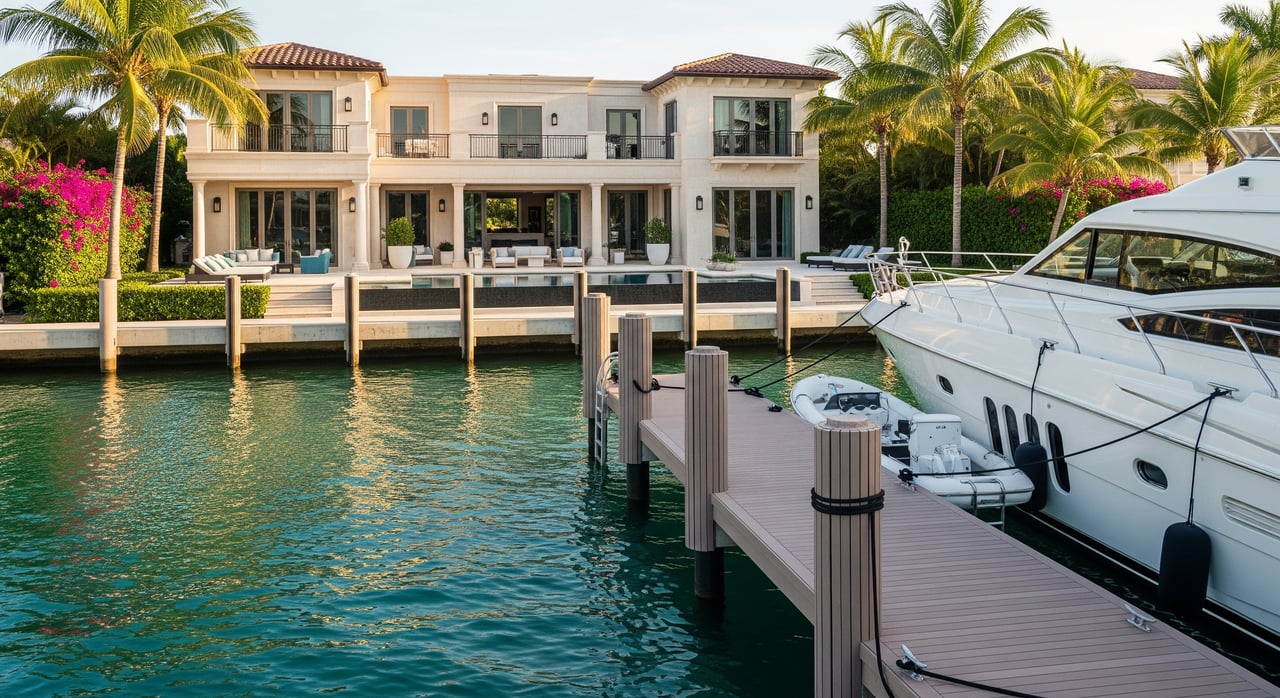
Trying to choose between Bel Marra and Boca Keys for your boat? You are not alone. Both east Boca micro-neighborhoods offer private canal homes near the Intracoastal, yet the right fit depends on your vessel, how you cruise, and the details of each dock. In this guide, you’ll learn how to compare canal depth, maneuvering room, bridge clearances, and service access so you can narrow your list with confidence. Let’s dive in.
How to compare these east Boca canals
Bel Marra and Boca Keys both sit on private canals that feed into the Intracoastal Waterway. Ocean access means running the ICW to the Boca Raton Inlet, so your boat’s size and the route’s controlling depth matter more than the neighborhood name. Because individual canals and lots vary, focus your comparison at the property level using the factors below.
Vessel size and draft fit
Start with depth at mean low water. Usable draft is set by the shallowest spot between your dock and the Intracoastal plus a safety margin. Smaller canals with short finger docks usually suit center consoles, bay boats, and runabouts in the mid‑20s in length with shallow drafts. Medium canals with wider turning basins can accommodate many 30–40 foot cruisers if depth is adequate. Deep, straight canals with long slips and clear runout are the best candidates for 40 foot plus vessels when both depth and lateral clearance allow. Treat these as guidelines only. Always verify depth, slip length, and turning room for the specific address.
Maneuvering room and slip layout
Canal width and turning basins determine what you can safely spin and dock. Measure the usable length of the slip, the beam at the pilings, and the distance from the finger pier to the bulkhead. Note nearby bends and any tight corners you would navigate after casting off. In narrow canals, long boats can be hard to back and swing without touching pilings or neighbors, especially on windy days or with strong current.
Route to the Intracoastal and inlet
The time from your dock to open water depends on distance and speed zones. A longer route through no‑wake residential canals and the ICW adds run time for every trip offshore. Map your path from the property to the ICW, then to the Boca Raton Inlet, and estimate real travel time under typical speed restrictions. If you fish or cruise often, shorter and more direct routes reduce friction and fuel burn.
Bridges and vertical clearance
Know every overhead constraint along your route. Fixed bridges set a hard height limit, while bascule bridges can open but may require radio contact or scheduled openings. Trace your path on authoritative charts to confirm clearances and identify any low power lines or tree overhangs. Even if many canal roads do not cross with low bridges, you should still confirm the full route from the dock to the inlet.
Tides and currents
Southeast Florida’s tidal range is modest, but low tides can be decisive if your draft is close to the controlling depth. Currents are stronger near the inlet and in narrow channels. Use authoritative tide predictions to plan soundings and trial runs at or near low water.
Neighborhood vibe and lifestyle fit
Both areas attract boat‑forward lifestyles, though the feel on the water can change by block. On weekends, expect more recreational traffic in canals closer to main channels and popular routes. Visit candidate properties at different times of day to gauge noise, wakes, and docking ease. If walkability to waterfront dining or bait and tackle matters, factor that into your selection.
Marinas, fuels, and haul‑out access
If you own a larger cruiser or sportfish, proximity to full‑service marinas is a quality‑of‑life issue. Look for haul‑out capacity that matches your length and weight, on‑site mechanics and electricians, and fuel availability. Confirm run times from the property to your preferred yard. Shorter runs make routine service and emergencies simpler, and they can also help with insurance conversations about safe harbor options.
Permits, seawalls, and insurance: what to check
Waterfront homes involve more than views. Your dock, lift, and seawall all affect safety, usability, and cost. Permitting and inspections should be part of your due diligence, especially if you plan upgrades.
Dock, lift, and seawall permits
Dock, seawall, and lift projects commonly require approvals from the City of Boca Raton or Palm Beach County, and in many cases state environmental permits. If the property is in an association, review HOA rules for boat size, dock usage, and visible equipment. Ask the seller for copies of existing permits and any open applications or violations.
Seawall condition and elevation
Seawall condition influences both your ability to secure a vessel and your insurance. Request recent inspection reports, the age of the seawall, last repair or replacement date, and the top‑of‑wall elevation. Replacement can be costly and sometimes requires environmental approvals, so bake those numbers into your budget.
Flood zones and insurance
Flood insurance costs depend on FEMA flood zone, property elevation, and recent map updates. Boat insurance underwriters will ask about your mooring location, distance to safe harbor, and haul‑out options. Homes with sheltered access and nearby service yards can be easier to insure at favorable terms.
What to request from the listing agent or seller
Gather the following for each address you are considering in Bel Marra or Boca Keys:
- Dock plan with measured slip length, beam between pilings, and orientation to the bulkhead.
- Depth soundings at the slip and along the route to the Intracoastal at mean low water.
- Route map to the Boca Raton Inlet with distance and estimated run time under posted speeds.
- Canal width and turning basin dimensions in front of the property.
- Overhead constraints along the route, including fixed bridge clearances and power lines.
- Seawall inspection report, age, last repair date, and top‑of‑wall elevation.
- Copies of dock, lift, and seawall permits plus any open violations.
- HOA or deed rules related to boat size, dock usage, and transient moorage.
- Any easements that affect water access.
For operations and services:
- Names of the nearest full‑service marinas, their haul‑out capacities, and run times from the property.
- Locations of the nearest fuel dock and pump‑out service.
- Local tide tables and typical current patterns for your route.
- Any recent dredging or shoaling notes for the canal or approach.
Key questions:
- What is the largest vessel currently kept at the property, and have there been draft issues?
- Any insurance claims related to the dock or seawall in the last ten years?
- Have neighbors required dredging or had permit denials for larger boats?
- Any planned public works or dredging that could change access or depth?
Decision framework by vessel size
Your boat and usage should drive your shortlist. Use this quick filter before touring homes:
- If your boat is under about 28 feet with a shallow draft: you will likely find good options across many private canals in both Bel Marra and Boca Keys. Still confirm slip length and depth at mean low water.
- If your boat is 30–40 feet: focus on properties with documented deeper water at low tide, longer slips, and a clear turning basin. Proximity to a full‑service marina is a plus for haul‑out and routine maintenance.
- If your boat is over 40 feet or a heavy sportfish: require professional soundings from the dock to the inlet, written confirmation of slip suitability, and a list of nearby yards that can haul your vessel. Be ready to prioritize properties with proven deep water or consider keeping the boat at a marina if a private canal is marginal.
How to verify the details with confidence
Rely on authoritative data and hands‑on evaluation. Before you write an offer, plan a low‑tide walkthrough of the route with a local captain or marine surveyor. Use nautical charts to trace the path from the dock to the Boca Raton Inlet and note any bridge clearances or potential shoaling. Confirm flood zones with FEMA resources and review permits with the City of Boca Raton or Palm Beach County. Call marinas directly to verify haul‑out capacities and services.
A property‑level approach to Bel Marra vs Boca Keys
Both neighborhoods offer desirable east Boca canal living. The key differences for boaters usually show up at the address level: actual water depth, slip length and layout, canal width, and route complexity. If you assess those items consistently, your decision will become clear. You will see which properties support your boat today and your next boat tomorrow.
Ready to shortlist with precision and negotiate from a position of strength? Let a local, boating‑savvy advisor coordinate the measurements, permits, and marina calls while you focus on lifestyle and design.
If you want a discreet, hands‑on search that aligns your vessel and your home, connect with Dana Ocampo for a consult.
FAQs
Which neighborhood has better ocean access for boaters?
- Both Bel Marra and Boca Keys connect to the Intracoastal and then the Boca Raton Inlet, so address‑level depth, canal layout, and route distance are more important than the neighborhood name.
What size boats typically fit in these east Boca canals?
- Small to mid‑size boats often fit many canals, 30–40 footers need deeper water and wider turning basins, and 40 foot plus vessels require verified depths and longer slips along a clear route.
How do I check depth for a specific property I like?
- Request recent soundings at mean low water at the slip and along the route, and hire a marine surveyor or local captain to run a low‑tide check from the dock to the inlet.
Are there bridge height limits between these areas and the inlet?
- You should trace your full route on nautical charts to confirm any fixed bridge clearances or overhead lines, then verify on the water before committing to a property or lift height.
What permits are needed for a new boat lift or seawall work?
- Expect permits through the City of Boca Raton or Palm Beach County and, in many cases, state environmental approvals; also review any HOA rules before planning changes.